Last updated: 8 September 2026. Fees and processing times verified against the MFA eVisa portal (evisa.mfa.ir) on 8 September 2026 by our editorial team.
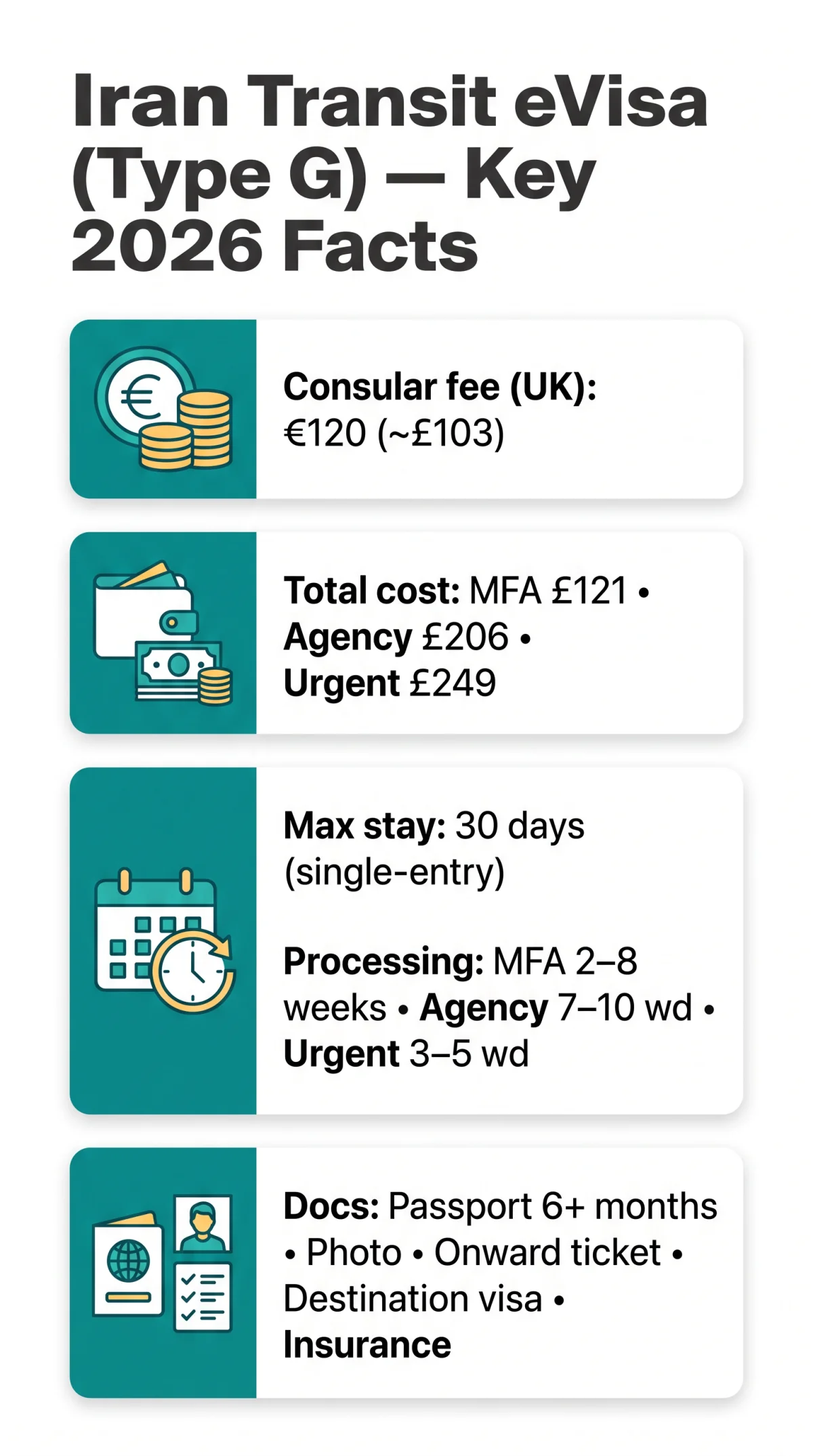
The iran evisa fee for transit (Type G) is €120 in consular stamp fees for UK passport holders, with total costs from £121 (MFA portal direct) to £249 (urgent agency path). This electronic transit visa permits a maximum stay of 30 days for travellers passing through Iran en route to a third country.
The Iran Transit eVisa fee in 2026 ranges from approximately €50 to €120 depending on nationality. UK citizens pay €120 in consular fees, a reciprocal fee reflecting the UK’s own visa charges for Iranian nationals, plus an optional agency service fee of £85 to £128 if using an intermediary. The total estimated cost for a UK passport holder is between £121 (cheapest path via MFA portal) and £249 (fastest path via agency), including travel insurance and photograph costs.
This guide is published by an independent travel-information website. It is not affiliated with or operated by Iran’s Ministry of Foreign Affairs. Always verify current requirements on the MFA portal at evisa.mfa.ir before applying.
Issued by Iran’s Ministry of Foreign Affairs (MFA) through the eVisa portal at evisa.mfa.ir, the Iran Transit eVisa is classified as Type G and is available only as a single-entry visa. It is generally not extendable within Iran, unlike the Tourist eVisa (Type B) which can be extended up to 90 days. UK, US, and Canadian citizens are not eligible for Visa on Arrival and must obtain all visas prior to travel.
What Is the Iran Transit eVisa?
The Iran Transit eVisa (Type G) is a short-stay electronic visa issued by the Ministry of Foreign Affairs (MFA) for travellers passing through Iran to a third destination. It permits a maximum stay of 30 days and is restricted to single entry only.
Iran’s MFA classifies its electronic visas into distinct categories: Type G for transit, Type B for tourist visits, and Type A for business entry. The Iran Transit eVisa is for through-travel only, not sightseeing, and is used by overland travellers and airline passengers continuing to a third country.
Applications are submitted through the MFA eVisa portal at evisa.mfa.ir. The iran evisa fee for transit varies by nationality, with UK passport holders paying a visa stamp fee of €120. The Iran Transit eVisa (Type G) is for onward transit only, unlike the Tourist eVisa (Type B) which permits sightseeing.
Iran Transit eVisa Fee & Total Cost for UK Citizens in 2026
The Iran Transit eVisa consular stamp fee is €120 for UK passport holders, a reciprocal fee set by Iran’s MFA. The fee is non-refundable regardless of the approval outcome. Total costs range from £121 (MFA direct) to £249 (urgent agency). The Ministry of Foreign Affairs can change visa fees without prior notice; verify on evisa.mfa.ir 48 hours before applying.
Fees and processing times were last checked against evisa.mfa.ir on 8 September 2026.
| Cost Component | MFA Direct | Standard Agency | Urgent Agency |
|---|---|---|---|
| Consular stamp fee | €120 (~£103) | €120 (~£103) | €120 (~£103) |
| Agency service fee | – | £85 | £128 |
| Travel insurance (from) | ~£13 | ~£13 | ~£13 |
| Passport photos | £5-£10 | £5-£10 | £5-£10 |
| Total estimated | ~£121 | ~£206 | ~£249 |
Agency vs Direct MFA Portal: Cost Comparison
The MFA portal route costs €0 in service fees but takes 2-8 weeks with a high rejection rate and no document-review support. The Iran Transit eVisa agency route adds £85 (standard, 7-10 working days) or £128 (urgent, 3-5 working days) but offers near-guaranteed approval and pre-submission document checks. For Iran visa for UK citizens, agencies are strongly recommended given >6-week MFA processing times. The iran evisa fee for transit applies to single-entry Type G visas only; the consular fee goes to the Iranian government, while agency fees are separate.
Eligibility & Required Documents for the Iran Transit eVisa
The Iran Transit eVisa eligibility requires a passport valid for 6 months beyond the travel date, a visa-waiver or valid visa for the next destination, and confirmed onward travel. UK citizens are eligible to apply via the MFA portal but cannot obtain an Electronic Visa on Arrival (E-VOA).
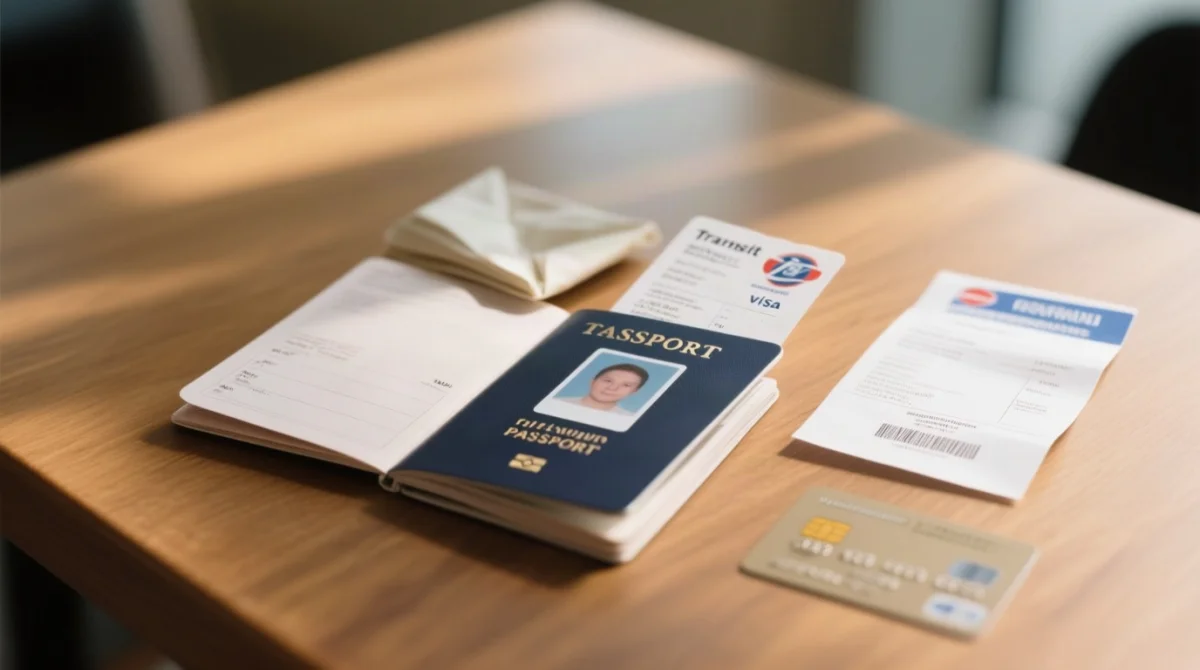
Prepare the following documents for the Iran Transit eVisa application:
- Passport with at least 6 months validity remaining.
- Digital passport-style photograph with a plain light background (max 10 MB).
- Confirmed onward travel ticket or overland itinerary to a third country.
- Valid visa or visa-waiver confirmation for the onward destination country.
- Travel insurance policy (available from €15).
Unlike the tourist eVisa, the Iran Transit eVisa strictly requires proof of onward travel to a third country. Overland travellers may also need a Carnet de Passages and an International Driving Permit.
Maximum Stay, Extensions & Processing Time for Iran Transit eVisa
The Iran Transit eVisa (Type G) allows a maximum stay of 30 days and is generally not extendable within Iran. The tourist eVisa (Type B) starts at 30 days but can be extended up to 90 days through the Police Department of Foreign Aliens Affairs.
The MFA portal at evisa.mfa.ir takes 2-8 weeks; authorised agencies complete standard processing in 7-10 working days and urgent processing in 3-5 working days. UK, USA, and Canada passport holders should expect more than 6 weeks for standard processing of the Iran Transit eVisa.
Transit eVisa vs Tourist eVisa: Key Differences
The Iran Transit eVisa (Type G) allows 30 days for through-travel only, whereas the tourist eVisa (Type B) allows an initial 30 days extendable up to 90 days within Iran. The Iran Transit eVisa requires a valid onward visa and confirmed travel to a third country; the tourist eVisa does not. The iran evisa fee for transit is €120 for UK citizens on the consular stamp schedule, while the tourist visa follows a separate fee structure. Neither Iran visa for UK citizens is available as a Visa on Arrival.
| Attribute | Iran Transit eVisa (Type G) | Tourist eVisa (Type B) |
|---|---|---|
| Purpose | Passing through Iran en route to a third country | Independent or group travel, visiting friends and relatives |
| Maximum stay | 30 days | 30 days (extendable to 90 days) |
| Extendability | Generally not extendable | Yes, via Police Department of Foreign Aliens Affairs |
| Onward visa required | Yes | No |
| Entries | Single entry | Single entry |
| Consular fee (UK) | €120 | Separate schedule |
| VOA available for UK citizens | No | No |
How to Apply for Iran Transit eVisa Online
The Iran Transit eVisa application involves six steps via the MFA portal at evisa.mfa.ir:
Gather documents
Passport valid 6+ months, digital photo, onward travel proof, destination-country visa.
Complete the online form
Apply at the MFA eVisa application portal.
Upload photo and supporting documents
Submit all required files for your application.
Pay the Iran Transit eVisa fee online
Complete the payment for your application.
Receive a visa grant notice
Authorization code valid for 1 month.
Present the code at an Iranian consulate
Get your passport stamped.
Processing takes 2-8 weeks via the MFA portal or 7-10 working days (standard) or 3-5 working days (urgent) through an authorised agency. Check Iran Transit eVisa application status by logging in to evisa.mfa.ir with your email and reference number.
Transit Scenarios: Airport Layovers & Overland Routes for Iran Transit eVisa
UK passport holders need the Iran Transit eVisa even for airside layovers at Imam Khomeini International Airport (IKIA), as no Transit Without Visa (TWOV) policy applies. Verify current TWOV rules on evisa.mfa.ir before booking.
For overland transit, Iran Transit eVisa holders can cross at Bazargan (Turkey), Norduz (Armenia), or Bajgiran (Turkmenistan). The visa is issued as a separate paper document, not a passport sticker, and must be kept until exit from Iran.
FAQ: Iran Transit eVisa Fee, Eligibility, Stay Duration and Application Details
How much does the Iran transit eVisa cost in 2026?
Consular stamp fees range from €15 (Iraqi nationals) to €120 (UK nationals). UK citizens pay €120, plus an agency fee of £85 (standard, 7-10 working days) or £128 (urgent, 3-5 working days). Total for UK passport holders: £121 via MFA portal, £206 standard agency, or £249 urgent agency.
Can UK citizens get an Iran transit eVisa on arrival?
No. E-VOA is not available for the Iran Transit eVisa (Type G) or for UK nationals generally. A pre-travel visa via the MFA portal or an authorised agency is mandatory.
What is the difference between Iran transit eVisa and tourist eVisa?
The Iran Transit eVisa (Type G) allows 30 days for through-travel only, requires an onward visa, and is not extendable. The Tourist eVisa (Type B) allows 30 days extendable to 90 days, permits sightseeing, and does not require onward travel proof.
How long can I stay in Iran on a transit eVisa?
Maximum stay on the Iran Transit eVisa (Type G) is 30 days, single-entry, generally not extendable. Contact the Police Department of Foreign Aliens Affairs for emergencies.
What documents do I need for the Iran transit eVisa?
Passport valid 6+ months, digital photo (max 10 MB), onward travel proof, valid visa or visa-waiver for next destination, and travel insurance (from €15). Overland travellers may also need a Carnet de Passages and an IDP.
Do I need an Iran eVisa for a layover at Tehran airport?
UK passport holders need a visa even for airside transit at IKIA. No TWOV policy applies. Verify at evisa.mfa.ir before booking.
Can I extend my Iran transit visa while in the country?
The Iran Transit eVisa (Type G) is generally not extendable. For emergencies such as cancelled flights, contact the Police Department of Foreign Aliens Affairs directly.
Are there processing delays for Iran eVisa in 2026?
Yes. Security developments in January and February 2026 caused longer processing times and lower approval rates. Nowruz holidays (18 March to 5 April) add further delays. Apply at least 8 weeks before travel.